Key takeaways
- Cox's Bazar is famed as the world's longest natural sandy sea beach — commonly cited at around 120 km of near-unbroken shoreline on the Bay of Bengal in southeastern Bangladesh.
- How to go to Cox's Bazar: fly from Dhaka (about 1 hour), take the Dhaka–Cox's Bazar train (about 9 hours), or take a bus (about 9–11 hours). Air is fastest; bus is cheapest.
- Best time to visit Cox's Bazar is winter (roughly November–February): dry, calm and ideal — and the window when Saint Martin's usually opens.
- Must-see places to visit: Laboni, Sugandha and Kolatoli beaches in town, plus Himchari, Inani, Ramu, Maheshkhali and the Marine Drive coastal road.
- Saint Martin's Island access is seasonal, capped and rule-bound — always verify current official directives before planning, and travel responsibly on this fragile coral island.
Few destinations pack as much coastline into one place as Cox's Bazar. Sitting in Bangladesh's Chattogram division on the eastern edge of the Bay of Bengal, this seaside town is built around a claim that draws travellers from across South Asia and beyond: it fronts the world's longest natural sandy sea beach, commonly described as roughly 120 km of near-unbroken sand. Whether you come for a lazy dip, a hilltop sunset, a coral-island day trip, or just to drive with the sea on one side and green hills on the other, this Cox's Bazar travel guide covers how to go, when to go, what to see, where to stay, and roughly what it costs. Every price and time below is indicative and shifts with season, class and negotiation — treat figures as ranges, not quotes. Last updated: July 2026.
Why Cox's Bazar is called the world's longest sea beach
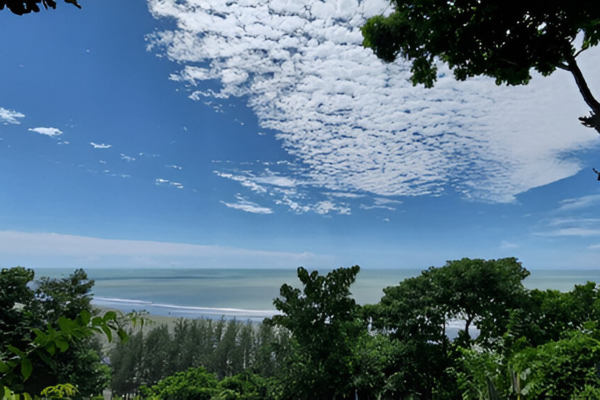
The headline stat is the reason most people come. Cox's Bazar is widely cited as the longest natural sandy sea beach on Earth, running for a length commonly given as about 120 km without a major break. Different bodies measure coastlines differently — where a beach "starts" and "ends" is partly a matter of definition — so it is fairer to treat 120 km as the well-known figure rather than a surveyed constant. What is not in dispute is the sheer scale: the sand stretches beyond the horizon in both directions, and the coastal Marine Drive lets you travel alongside it for tens of kilometres.
That scale shapes the whole experience. Instead of one crowded strip, Cox's Bazar is a chain of beach "points," each with a slightly different character — from the busy, vendor-lined main beach in town to quiet rocky stretches an hour's drive south. The Bay of Bengal here is warm, the sunsets are long and low, and the backdrop of forested hills gives the coast a scenic edge.
How to go to Cox's Bazar
Cox's Bazar is about 400 km southeast of the capital, Dhaka, and roughly 150 km south of the port city of Chattogram. There are three realistic ways to get there from Dhaka, and the right choice comes down to your budget and how much time you're willing to spend in transit.
By air (fastest, about 1 hour)
Domestic flights connect Dhaka to Cox's Bazar Airport in around an hour, by far the quickest option. Several carriers operate the route, with more frequency in peak winter. Fares swing widely with demand — cheapest if you book early and travel midweek, most expensive on winter weekends and holidays. If your time is valuable, flying one way and returning by train or road is a popular combination.
By train (about 9 hours, scenic and comfortable)
The newer Dhaka–Cox's Bazar railway is a genuine game-changer for overland travel. Intercity services such as the Cox's Bazar Express run the route in roughly nine hours, with daytime and overnight options and a range of classes from non-AC chairs to AC seats and berths. An overnight departure lets you sleep through the journey and arrive ready for the beach. Seats sell out fast in winter, so book through the official Bangladesh Railway channel well ahead. Comfortable, safe and priced between air and bus, the train has quickly become many travellers' default.
By bus (about 9–11 hours, cheapest and most frequent)
Long-distance buses run frequently from Dhaka, taking indicatively 9–11 hours depending on traffic, road conditions and stops. Options range from ordinary non-AC coaches to premium "business class" sleeper services with reclining seats. Buses are the most budget-friendly and the easiest to book last-minute, but they are also the most tiring and the most exposed to road delays. Overnight departures are common, so you can travel while you sleep.
| Option | Indicative time (from Dhaka) | Relative cost | Best for |
|---|---|---|---|
| Flight | About 1 hour | Highest | Short trips, saving time |
| Train (e.g. Cox's Bazar Express) | About 9 hours | Medium | Comfort on a mid budget |
| Bus (AC / sleeper) | About 9–11 hours | Low–Medium | Value with more comfort |
| Bus (non-AC) | About 9–11 hours | Lowest | Tightest budgets |
Times and costs above are indicative only and change with season, operator, class and traffic. Confirm current schedules and fares before booking.
Best time to visit Cox's Bazar
Winter (November–February): peak and ideal
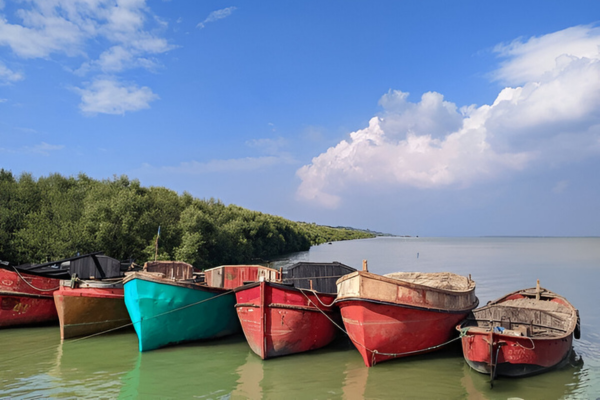
The best time to visit Cox's Bazar is the winter dry season, roughly November to February. Skies are clear, humidity drops, the sea is calmer, and daytime temperatures are pleasant for the beach without being punishing. This is also the period when Saint Martin's Island typically opens to tourists. The trade-off is crowds and prices: December–January weekends and public holidays are busy, and hotels charge their highest rates, so book early.
Shoulder and monsoon (March–October)
Spring into early summer (March–May) gets progressively hotter and more humid, but the beach stays open and prices ease. The monsoon (roughly June–September) brings heavy rain and rough seas; swimming becomes hazardous, boat trips to the islands are often suspended, and Marine Drive can be affected by weather. Monsoon has its own dramatic, green appeal and lower prices, but it suits flexible travellers happy to watch the sea rather than swim in it.
Cox's Bazar beaches and points to visit
In and around town, the beach is divided into named "points." Knowing them helps you choose where to base yourself and where to head for a quieter swim.
Laboni, Sugandha and Kolatoli (in-town beaches)
Laboni Beach is the main and most accessible point, closest to the town centre and lined with shops, stalls and photographers — lively but crowded. Sugandha Beach, a short way south, is known for its food stalls and fried-seafood vendors. Kolatoli Beach anchors the main hotel-and-restaurant zone and is the usual jumping-off point for drives down Marine Drive. All three are easy to reach on foot, by rickshaw or by short auto ride, and each gets less crowded the earlier in the day you arrive.
Himchari and Inani (south of town)
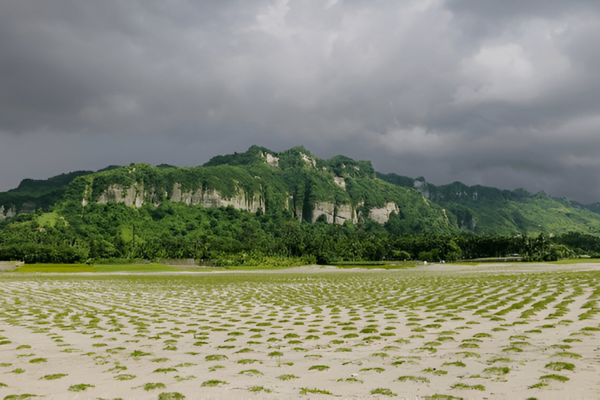
Himchari, about 15–20 minutes south, pairs beach with hills and a seasonal waterfall that runs best after rain. Inani Beach, further along Marine Drive, is prized for its calmer feel and rocky, coral-strewn shore at low tide — a scenic contrast to the town beaches. These southern points are best combined into a single half-day drive, ideally timed to catch sunset on the way back.
Marine Drive: the scenic coastal road
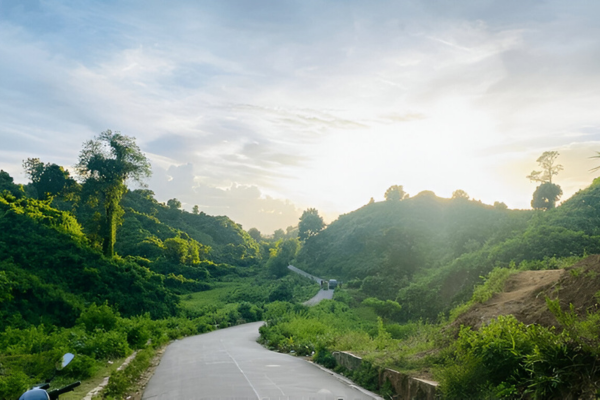
The Marine Drive is one of Cox's Bazar's signature experiences. This coastal road runs south from the town toward Teknaf — a stretch of roughly 80 km — with the Bay of Bengal on one side and green hills on the other for much of the way. It links the beach points and day-trip spots, passing Himchari and Inani. Hiring a car, CNG auto-rickshaw or open jeep for a slow sunset drive is among the most memorable things to do here. Because it hugs the shore, sections can be affected by weather and high tides, so check conditions before setting out, especially outside winter.
Day trips: islands, temples and beyond
Himchari and Inani
The easiest day trip is simply driving Marine Drive to Himchari and Inani, stopping for the waterfall, viewpoints and quieter sand. Half a day is enough; a full day lets you linger for sunset on the way back.
Ramu, Maheshkhali and Sonadia
Ramu, a short drive inland, is known for its Buddhist temples and monasteries, including large seated and reclining Buddha statues — a cultural counterpoint to the beach. Maheshkhali Island, reached by boat across a channel, offers temples, a hilly landscape, betel-leaf gardens and salt fields. Sonadia Island is a quieter, ecologically sensitive spot better suited to nature-minded visitors; access can be limited, so plan with a reputable local operator.
Saint Martin's Island (seasonal, capped access)
Saint Martin's Island — Bangladesh's only coral island — is the region's most famous excursion, with turquoise water, coral rock and coconut palms. It is also its most tightly regulated. Access is seasonal and subject to changing government rules: in recent seasons the island opened to tourists only for a limited winter window (roughly November to January), with a daily visitor cap reported at around 2,000 people, online-only tickets through the official tourism portal, restrictions on overnight stays, and authorised ships departing from Cox's Bazar city rather than the older Teknaf route. A multi-month closure has applied outside the tourist window to let the fragile ecosystem recover. These arrangements shift year to year, so always verify the current official Bangladesh Tourism Board directives before you plan — do not assume last year's rules still hold. Saint Martin's is an ecologically fragile coral island: skip single-use plastics, never collect coral or shells, and follow every posted directive.
Cox's Bazar hotels: where to stay
Cox's Bazar has one of Bangladesh's densest concentrations of hotels, so you'll find something for every budget — but quality and price vary enormously, and peak-winter weekends sell out. Choosing the right area matters as much as the star rating.
By area
Kolatoli is the main tourist hub, packed with mid-range and upmarket hotels, restaurants and the entrance to Marine Drive — convenient but busy. Sugandha and Laboni put you near the main beach and food streets. For a quieter, more scenic stay, some resorts sit further south along Marine Drive toward Inani, trading walkability for calm and sea views.
By budget
Options run from simple guesthouses and budget hotels to comfortable mid-range properties and premium beachfront resorts with pools and sea-view rooms. Rates spike on winter weekends and holidays and soften midweek and off-season, so book ahead for winter and confirm the room, view and price directly before paying. Treat any quoted rate as indicative — negotiation and season make a big difference.
Food in Cox's Bazar
Being a fishing coast, Cox's Bazar is at its best with seafood. Fresh fish, prawns, crab, lobster and squid appear on menus everywhere, often grilled or fried to order at beachside stalls around Sugandha. Dried fish (shutki) is a regional speciality and a common souvenir. Beyond seafood, you'll find standard Bangladeshi rice-and-curry meals, biryani, and plenty of tea stalls. A few pointers: check prices before ordering at unmarked stalls, choose busy vendors for freshness, and drink bottled or purified water. Eating where locals eat is usually cheaper and better than the tourist-facing restaurants right on the sand.
Cox's Bazar tour cost: budgeting your trip
What a trip costs depends heavily on how you travel and where you sleep. The single biggest variables are your transport class from Dhaka and your hotel tier — a non-AC bus and a shared guesthouse cost a fraction of a flight and a beachfront resort. The rough tiers below are an indicative framework, not fixed quotes; all figures move with season, group size and negotiation.
- Backpacker / budget (lowest daily spend): non-AC bus from Dhaka, guesthouse or shared room, street-stall meals, public transport.
- Mid-range (moderate): AC train or AC bus, a comfortable mid-range hotel, a mix of local and restaurant dining.
- Comfort / family (higher): flight or AC train, an upper-mid hotel near the beach, hired transport for day trips.
- Premium (highest): flight from Dhaka, a beachfront resort with a sea view, private cars and guided excursions.
To keep a Cox's Bazar tour cost down: travel midweek and off-peak, book train or bus tickets early, eat at local stalls, share transport for Marine Drive day trips, and negotiate hotel rates directly, especially for multi-night stays. Because the town is walkable and short hops are cheap by rickshaw or auto, day-to-day spending is easy to control once you're there. For more ways to compare destinations and stretch a budget, browse our top 10 lists over at Countly.
Safety and responsible travel
In the water
The Bay of Bengal looks inviting but carries strong rip currents and undertow that regularly catch even strong swimmers. The essentials: swim only in flagged, lifeguard-patrolled zones during daylight; stay within your depth; never swim alone or after dark; and if you feel pulled sideways or out to sea, don't fight it head-on — signal for help and swim parallel to shore until the pull releases. In monsoon, seas are frequently too rough to enter at all.
On land and in the community
Keep valuables secure in crowds, agree fares before taking a rickshaw or auto, and dress modestly in keeping with local norms. Above all, tread lightly: the coast, the hills and especially Saint Martin's Island are under real environmental pressure. Carry out your rubbish, refuse single-use plastic, don't remove coral, shells or sand, and respect visitor caps and access rules — they exist to keep these places worth visiting for the next traveller. For more destination guides, see our top 10 travel lists or head back to the homepage.
Frequently asked questions
Is Cox's Bazar really the world's longest sea beach?
Cox's Bazar is widely cited as the world's longest natural sandy sea beach, commonly described as roughly 120 km of near-unbroken shoreline along the Bay of Bengal in southeastern Bangladesh. Different sources measure the coastline in slightly different ways, so treat the figure as the well-known claim rather than a precise survey number — but the beach is unquestionably vast, and you can drive for hours along it via Marine Drive.
What is the best time to visit Cox's Bazar?
Winter, roughly November to February, is peak season and the ideal window: skies are dry, the sea is calm, and temperatures are comfortable. This is also the period when Saint Martin's Island typically opens to tourists. The monsoon months (about June to September) bring heavy rain, rough seas and strong currents, so swimming is riskier and boat trips are often suspended.
How do I get to Cox's Bazar from Dhaka?
You have three main options: fly (about 1 hour to Cox's Bazar Airport, the fastest but priciest), take the Dhaka–Cox's Bazar train (around 9 hours on services such as the Cox's Bazar Express, comfortable and scenic), or take a bus (indicatively 9–11 hours, the cheapest and most frequent). Air is best if time matters; train and bus suit tighter budgets. Confirm current schedules and fares before you book.
Can I visit Saint Martin's Island in 2026?
Saint Martin's Island access is seasonal and tightly regulated. In recent seasons the island opened to tourists only for a limited winter window (roughly November to January) with a daily visitor cap reported around 2,000 people, online-only tickets through the official tourism portal, restrictions on overnight stays, and ships departing from Cox's Bazar rather than Teknaf. Rules change year to year, so always check the latest official Bangladesh Tourism Board directives before you plan a trip.
How much does a Cox's Bazar tour cost?
Costs vary widely by season, hotel class, group size and how much you negotiate, so treat any figure as indicative. A budget trip can run on modest daily spending for a shared guesthouse, local food and public transport, while mid-range and premium beachfront hotels cost substantially more, especially on peak winter weekends. Book ahead for winter and confirm all prices locally before committing.
Is it safe to swim at Cox's Bazar beach?
It can be, but the Bay of Bengal has strong rip currents and undertow that catch even confident swimmers. Swim only in flagged, lifeguard-patrolled zones during daylight, stay within your depth, never swim alone or after dark, and get out immediately if you feel pulled sideways or offshore. During monsoon, seas are often too rough to enter safely.
Disclaimer: All costs, travel times, schedules and access rules in this guide are indicative and can change with season, demand, operator and government policy. Verify current fares, hotel rates, train and flight schedules, and especially the latest Saint Martin's Island visiting rules with official and local sources before you travel. Please travel responsibly — respect visitor caps, avoid single-use plastics, and help protect Cox's Bazar's beaches and fragile coral ecosystems.